The short answer
Make a list of one category you often search for or buy twice—not everything you own. Record what it is, how much is available, where it lives, and any limits on using it. Keep the list somewhere your household can find it, then check the actual item before buying a replacement. Start with paper or a tool you already use; no new storage system is required.
1. Choose one category and give the list a clear job
Start with this question: “What do I keep looking for—or buying because I cannot remember whether we have it?”
Choose a narrow category:
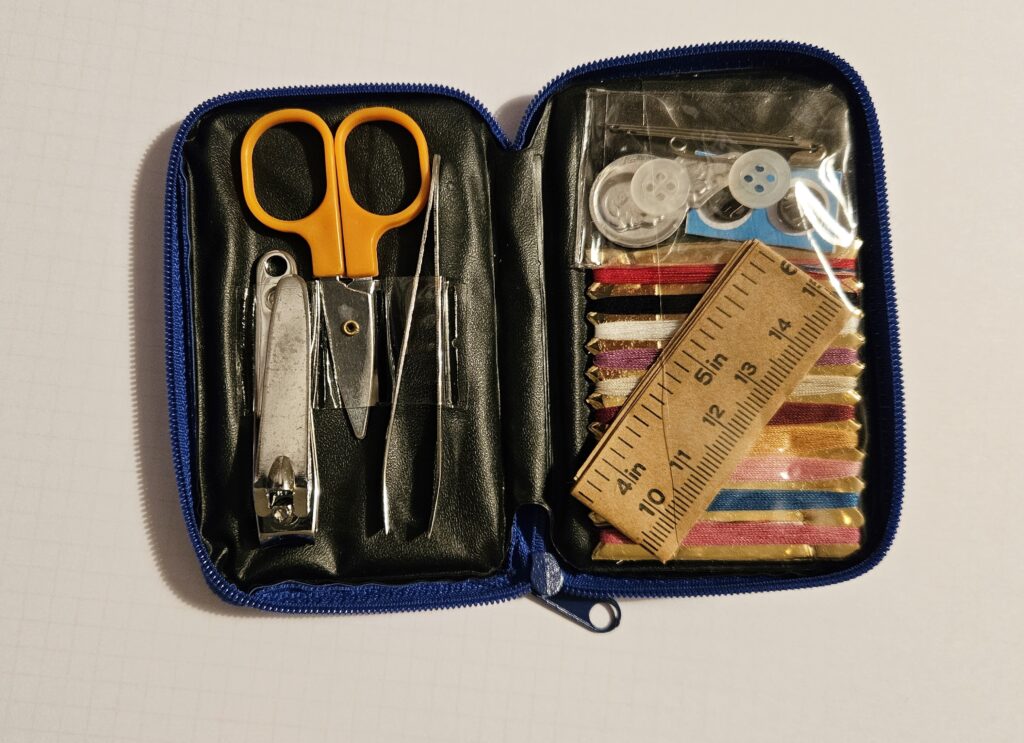
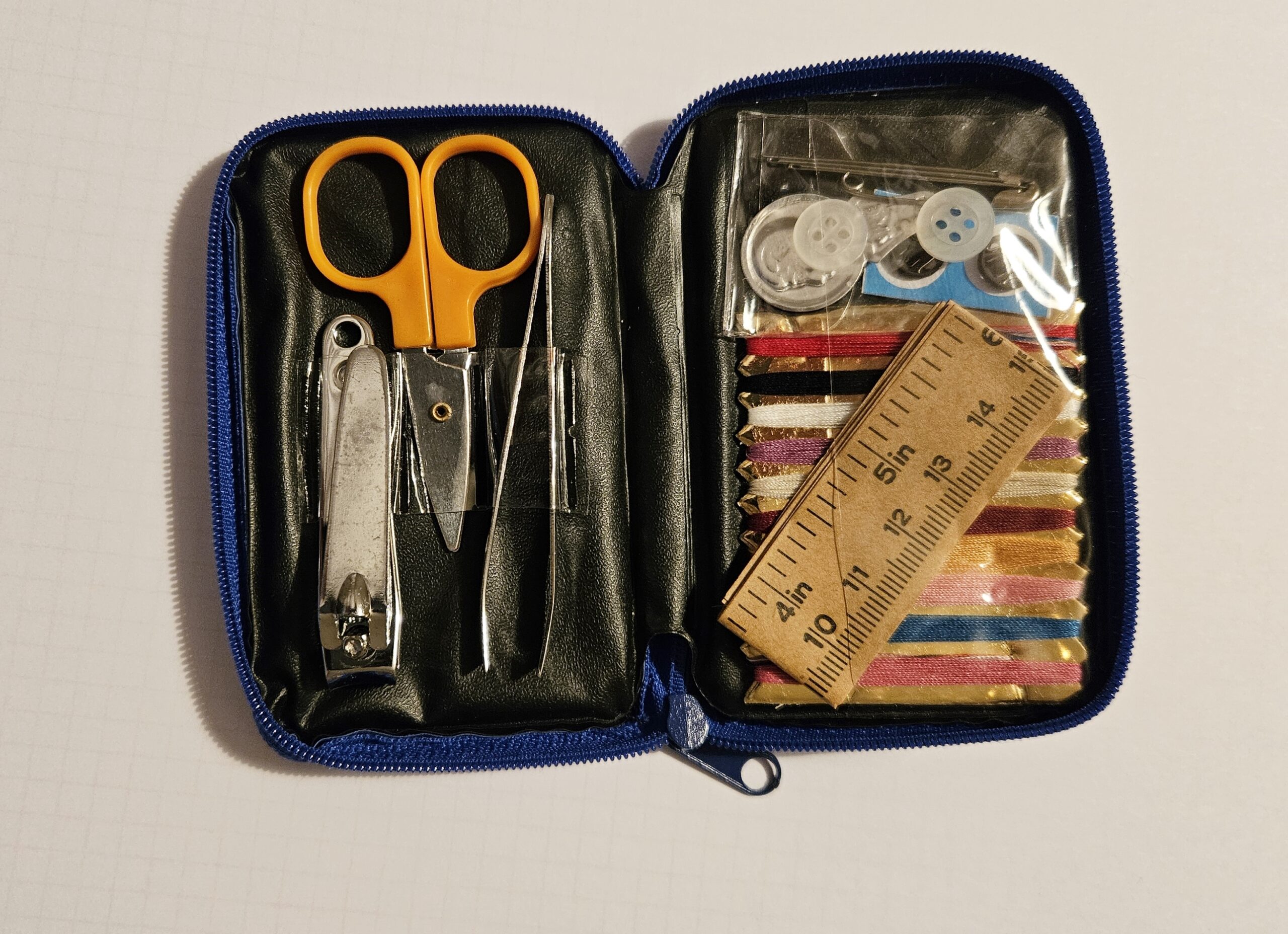
- Sewing and mending supplies.
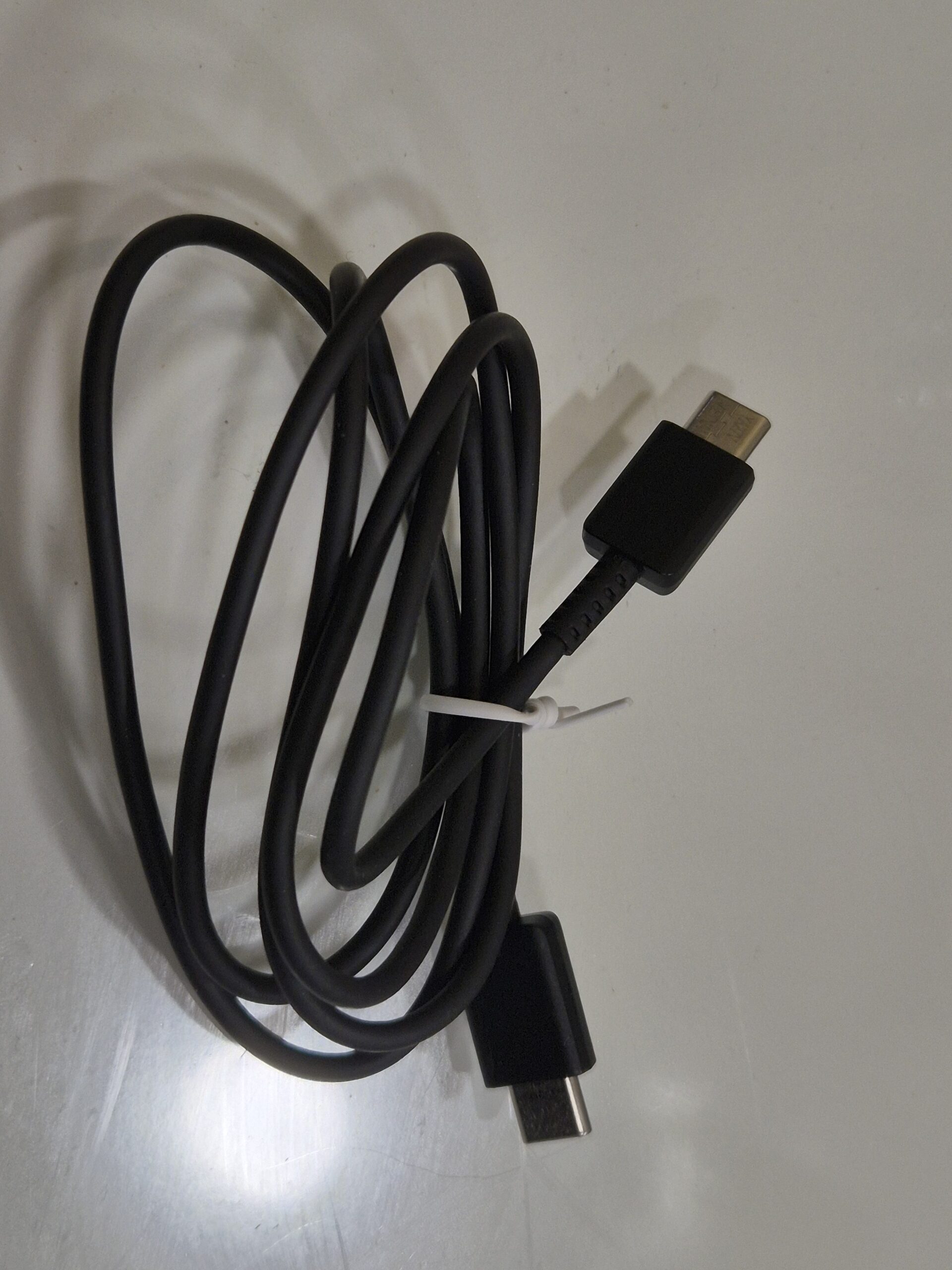
- Spare charging and data cables.
- Gift bags and wrapping supplies.
- Picture-hanging supplies.
- Materials for one particular hobby.
“Everything in the spare room” is a room-clearing project. “The thread, needles, and fabric patches available for mending” is a manageable inventory.
Write the category and purpose at the top of your page. For example:
Mending supplies: check here before buying supplies for a repair.
An inventory is an established way to record belongings. The National Association of Insurance Commissioners describes grouping items by room or category and using photographs to document them. For this smaller, everyday list, borrow the category approach without taking on a whole-home record. (content.naic.org)
Keep the purposes separate. An insurance inventory helps document possessions for a claim; this list helps answer a shopping or finding question. Do not assume a short list of craft supplies meets your insurer’s documentation needs. (content.naic.org)
You also do not have to decide whether every object deserves to stay. First establish what is available. Decisions about repair, sharing, or letting something go can follow when they become relevant.
2. Record only what changes the next decision
Use four core fields on paper or in a spreadsheet:
| Field | What to write |
|---|---|
| Item | A name someone in your household would recognize |
| Available amount | A count, a useful estimate, or “check before buying” |
| Location | Room, storage place, and container |
| Use note | Reserved, borrowed, incomplete, untested, or another relevant limit |
Add a last checked date if the category changes frequently or the list will not be reviewed for a while.
Choose the level of detail according to the decision. You might need to count spare cables individually, but you probably do not need to count every button. “Assorted buttons, small tin” may be enough—unless a project requires matching buttons.
For supplies that are partly used, record uncertainty rather than manufacture precision:
- “Black thread: partial spool; check amount for project.”
- “Blue fabric scraps: mixed sizes; inspect before planning.”
- “Gift bags: several small bags; no large bags found.”
Make location notes usable without relying on your memory. Replace “cupboard” with “hall cupboard → middle shelf → blue sewing pouch.”
In a shared home, distinguish present from available. A packet of materials set aside for someone else’s project is not necessarily a household spare. Use notes such as “reserved for quilt” or “personal—ask before using.”
Leave out fields that do not help you act. Purchase prices, acquisition dates, and elaborate classifications are unnecessary for this particular job.
3. Set up the first list without emptying the room
Try a short, bounded setup session. A 15-minute timer is one possible limit—not a promise that every category can be completed in that time.
- Name the boundary. Choose one category and identify the places you already know it might be stored.
- Look in one place at a time. Open the sewing pouch or cable drawer rather than unloading several cupboards.
- Write useful entries. Group similar supplies when individual entries would add little.
- Return items as you go. Keep the room usable throughout the session.
- Mark the gaps. Write “desk drawer not checked” rather than treating the list as complete.
- Stop at the boundary. Save unrelated discoveries for another day.
You do not need to move everything into one container. If craft supplies fit better in two existing places, record both. In a small home, a useful location note may be more practical than finding room for a new storage unit.
Paper is a reasonable starting point if you mainly check supplies at home. A spreadsheet or digital note may suit a household that wants to consult the list while shopping. Choose the format you will actually open, not the one with the most features.
Photographs are optional. NAIC includes photos among its inventory tools; for this everyday version, consider one only when it makes an item or container easier to identify. (content.naic.org)
Do not buy organizers merely to begin. Make the list first, then decide whether storage changes would solve a specific problem.

4. Worked examples: craft supplies and spare cables
The following entries are illustrative, not a record of a tested household or actual belongings. The quantities show how the format works; replace them with what you find.
Example: a mending-and-craft list
| Item | Available amount | Location | Use note |
|---|---|---|---|
| Black sewing thread | 1 partial spool | Hall cupboard → blue sewing pouch | Check remaining amount for repair |
| Hand-sewing needles | 1 packet | Blue sewing pouch → inside pocket | Household supplies |
| Assorted buttons | 1 small tin | Hall cupboard → beside sewing pouch | Matching set not confirmed |
| Blue cotton scraps | Mixed pieces | Bedroom wardrobe → fabric tote | Check dimensions before planning |
| Embroidery floss | Mixed colors | Fabric tote → clear pouch | Some reserved for current project |
Suppose you want to mend a dark shirt. The list directs you to the thread and needles. Retrieve them, check whether the thread is suitable and sufficient, and then make a shopping decision.
If the partial spool is not enough, write the specific need on your shopping list. You can still avoid purchasing another needle packet unnecessarily. The inventory has done its job even when it does not eliminate the purchase.
Example: a spare-cable list
| Item | Available amount | Location | Use note |
|---|---|---|---|
| USB-C to USB-C cable | 1 | Desk → top drawer → cable pouch | Spare; intended use not yet confirmed |
| USB-A to Micro-USB cable | 1 | Same cable pouch | Kept with older device; ask before borrowing |
| Unidentified cable | 1 | Cable pouch → separate bag | Identify before counting as usable |
| USB-C cable | 1 | Work bag → inner pocket | In daily use; not a household spare |
For cables, record both ends when you can identify them confidently. If you cannot, use a plain description or photo and mark the uncertainty.
Do not turn “we own a cable” into “this cable will do the job.” Before relying on it, confirm its suitability using the device and cable manufacturer’s information. Recording an unknown is useful; guessing is not.
These examples also show why available amount matters. A cable in daily use and a cable waiting to be identified should not be treated as two ready-to-use spares.

5. Make household access easy—and digital access deliberate
Choose one master copy. Agree on where it lives and who may update it.
For paper, keep the page near the supplies or in an agreed household notebook. If you photograph it for shopping, treat that photograph as a dated snapshot. Update the master page rather than maintaining several competing lists.
For a digital list:
- Give it a recognizable name, such as “Household spares.”
- Share it only with the people who need access.
- Check whether each person needs viewing or editing permission.
- Review sharing settings rather than assuming the document is private.
- Avoid putting passwords, access codes, financial records, or unnecessary personal details in it.
Those are sensible limits for a finding tool: it should describe supplies, not become a repository for sensitive household information.
Protect the account holding the list with a strong password and two-factor authentication. The FTC recommends both for protecting personal information in online accounts. (consumer.ftc.gov)
Where available, an authenticator app or security key offers stronger protection than verification codes sent by text or email, according to the FTC. (consumer.ftc.gov)
Keep the software on the device you use for the inventory updated as well. The FTC notes that updates often contain fixes for security weaknesses. (consumer.ftc.gov)
Finally, agree on boundaries around belongings. An item appearing on a shared list does not automatically give everyone permission to use it.
6. Turn the inventory into a check-before-buying habit
Use the inventory when a need arises—not just when you feel like organizing.
Before adding something from the chosen category to your shopping list:
- Describe the job. What do you need the item to do?
- Check the list. Is there a likely match?
- Retrieve the item. Confirm that it is still there.
- Check suitability and availability. Is there enough? Is it reserved? Does it meet the actual need?
- Choose the next step. Use it, check another location, ask to borrow, or buy the specific missing item.
If you are already in a store and cannot verify an uncertain entry, consider postponing a nonurgent purchase rather than treating uncertainty as proof that you own nothing suitable.
Update the list at natural change points: when you finish a supply, move a container, lend something out, or discover an entry is wrong. You do not need to record every use of a spool of thread. Change the entry when the change affects the next decision.
The EPA’s waste guidance encourages buying only what you need and considering borrowing, renting, or sharing infrequently used items. A check-before-buying routine is one practical way to apply that advice.
7. Fix the common mistakes, then stop when it works
The list grows into a whole-home project.
Return to the original category. Write other ideas on a “maybe later” note, not in the current inventory.
You count everything exactly.
Use an estimate where that is sufficient. Count precisely only when a specific decision requires it.
The location makes sense only to you.
Ask another household member to find one item using the note alone. Revise the wording if they need extra directions.
Unknown items appear as usable stock.
Keep “unidentified,” “untested,” and “reserved” visible. Do not hide those limits in a distant notes tab.
The record is mistaken for reality.
Check the physical item before an important purchase decision. If entries are repeatedly wrong, simplify the list and update it at the moment things change.
The system requires more effort than the problem warrants.
Drop unused columns. Merge entries that do not need individual tracking. If one labeled container answers the question adequately, you may not need a separate list for it.
Before calling the first category finished, check:
- Can I find the master list?
- Can someone else understand the location notes?
- Does the list distinguish usable supplies from unknown or unavailable items?
- Have I marked places I have not checked?
- Do I know when to update it?
A successful use-what-you-own inventory does not describe your home perfectly. It gives you a clear next step when you need something—and lets you stop organizing once that question is answered.