Quick answer: Borrow when a suitable item is available and the return arrangements are manageable. Rent when you need occasional access without permanent storage. Buy when realistic repeat use, dependable access and a workable storage space justify the full ownership cost. Start by checking whether something you already own can do the job.
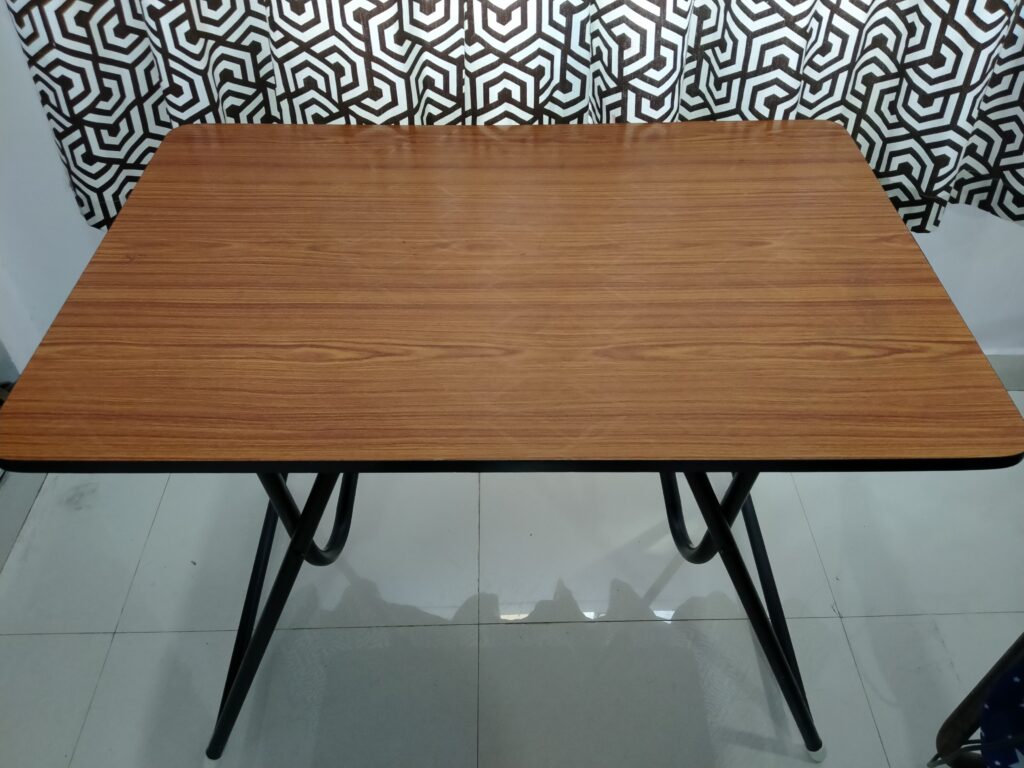
An occasional-use object does not automatically deserve—or fail to deserve—a place in your home. A folding table might earn its space through several recurring uses. A carpet cleaner might be better rented for planned jobs.
The useful question is not simply, “How often will I use it?” It is, “What is the most practical way to get this job done, including everything before and after using the object?”
1. Define the job before choosing the object
Write down what you need to accomplish, when, and what would count as a satisfactory result.
For a carpet cleaner, specify the rooms or surfaces you intend to clean. For a party table, specify whether you need a buffet surface, seated dining space or somewhere to set down supplies. Those are different requirements.
Then ask:
- Can an existing possession do the job adequately?
- Can the task be simplified so no extra object is needed?
- Is this a confirmed need or a possible future project?
- How many separate occasions are genuinely likely?
Use your calendar and past habits rather than an optimistic list of everything you could do with a purchase. If future use is uncertain, compare a one-time borrowing or rental option before committing to ownership.
Borrowing and renting are also legitimate waste-reduction strategies: the EPA specifically recommends borrowing, renting or sharing infrequently used items such as tools and party decorations. That guidance does not establish a particular environmental saving for your individual choice. Source: EPA waste guidance.
2. Compare seven practical factors—not just the price
Use this worksheet before checking out, reserving or buying.
| Factor | What to establish |
|---|---|
| Frequency | How many separate uses do you expect over a defined period? |
| Total cost | What will you pay for access, supplies, transport and routine care? |
| Storage | Where will the complete item and its accessories live? |
| Availability | Can you obtain the right item for the dates you need? |
| Transport | Can you move it through doorways, stairs and your vehicle safely? |
| Cleaning | What must be cleaned, with which products, before storage or return? |
| Damage terms | What happens if the item, an accessory or your property is damaged? |
Treat an unsuitable answer as a reason to reconsider, not something to hide inside a favorable price calculation.
For example, a low rental quote is not useful if you cannot collect and return the item within opening hours. An inexpensive purchase is not practical if its only storage place blocks access to belongings you use daily.
In a shared home, agree on storage before buying. Name the exact location rather than assuming someone else will make room.
3. Calculate the full cost over a realistic period
Choose a comparison period that matches your plans. Three years is used in the examples below, but it is not a recommended product lifespan.
Calculate each option separately:
Ownership cost
Purchase price + accessories + consumables + expected maintenance or repairs + any actual storage expense − cautious resale estimate
Rental cost
Number of rentals × all-in cost per rental
Borrowing cost
Access or membership charges, if any + transport + consumables + agreed cleaning or upkeep costs
Include taxes and delivery where applicable. Do not subtract resale proceeds unless you are comfortable treating them as uncertain; using zero is a conservative starting point.
Keep three things outside the routine-cost total:
- Refundable deposits or card holds: record the cash or credit you need available, but do not count a fully returned deposit as a final expense.
- Possible penalties or damage charges: list these as separate risks rather than assuming they will happen.
- Time and space: compare these explicitly, even if you do not assign them a dollar value.
For a simplified break-even calculation:
Break-even uses = fixed ownership cost ÷ (rental cost per use − ownership running cost per use)
Use this only when the options can perform the same job adequately. If the denominator is zero or negative, this model does not produce a financial break-even point.
4. Read the borrowing or rental rules before reserving
A library loan and a commercial rental can have very different obligations.
For example, Klamath County Library’s published Library of Things rules say most kits have a seven-day loan period and cannot be renewed. Kits must be returned in person to staff, not through a book drop. Its rules also specify overdue and replacement charges. These are that library’s rules—not a nationwide standard. (klamathlibrary.org)
For a commercial example, Rug Doctor’s self-checkout terms require inspecting equipment before leaving, returning it clean and returning it to the original store. Late charges may apply to partial days as well as full days. The terms also prohibit lending the rented equipment to someone else. (rugdoctor.com)
Before committing, ask:
- Am I eligible, and is the exact item available?
- When does the loan or rental clock start?
- What are the collection and return hours?
- Are attachments, containers and supplies included?
- What cleaning is required?
- What charges apply for lateness, loss or damage?
- What does any damage waiver actually cover or exclude?
- What happens if I cancel or change the date?
Party-table rentals deserve the same attention. The Flawless Table & Co., a San Antonio provider, publishes requirements for cleaning and restacking equipment, along with repair or replacement responsibilities. Use this as a prompt to check your own provider’s agreement, not as a prediction of local terms. (theflawlesstableco.com)
For a personal loan, agree on the return date, cleaning method and response to accidental damage before taking the item home.
5. Worked example: a carpet cleaner for two planned jobs
Every dollar amount below is hypothetical, not a current quote. Assume the rental and purchase options are suitable for the same intended cleaning job.
Suppose you expect two cleaning sessions over three years:
| Cost | Rent | Buy |
|---|---|---|
| Access or purchase | $40 per session | $300 once |
| Cleaning solution | $10 per session | $10 per session |
| Transport | $8 per session | $0 additional in this example |
| Three-year maintenance allowance | Included in access price for this example | $30 |
| Total for two sessions | $116 | $350 |
The ownership running cost is $10 per session. Renting costs $58 per session. The simplified break-even calculation is:
($300 + $30) ÷ ($58 − $10) = 6.875 sessions
Under these assumptions, ownership becomes cheaper at the seventh session—not after the two planned sessions. This assumes the owned machine remains serviceable and incurs no costs beyond those listed.
The practical checks matter just as much. BISSELL’s instructions for Big Green models 86T3, 86T3C and 86T3B call for vacuuming first, using wet and suction passes, and unplugging the machine before rinsing tanks and removing brush debris. Those instructions are model-specific. (support.bissell.com)
Before arranging access:
- Check the carpet manufacturer’s care requirements and the machine’s approved uses.
- Confirm the required formula and any attachment charges.
- Plan time for preparation, cleaning, carpet drying and equipment cleanup.
- Confirm that you can transport the machine.
Rug Doctor’s Big Green rental support page also requires cleaning the tanks, brush area, wheels and exterior before return. Cleanup belongs in your schedule, not just your cost comparison. (rugdoctor.com)
6. Worked example: a folding table for occasional gatherings
These figures are also hypothetical, not market prices. Assume you need one suitable folding table for two gatherings each year over three years: six uses.
Suppose:
- Buying costs $90, including tax.
- Renting costs $15 per event, including tax.
- Transport costs $10 per event.
- You have no additional paid storage cost.
- Cleaning supplies already on hand add no extra expense in this example.
- You assume no resale proceeds.
Buying costs $90. Renting costs 6 × $25 = $150.
Buying first becomes cheaper at the fourth use: three rentals cost $75; four cost $100. That result depends on the table remaining usable and not needing additional spending.
Now test the conclusion against your home. Where will the folded table go? Can you reach it without moving several other things? Does everyone sharing that space agree?
Borrowing could still be preferable if a suitable table is available nearby and transport and return arrangements are easy. Conversely, renting could be worth the extra cost if you do not want permanent storage.
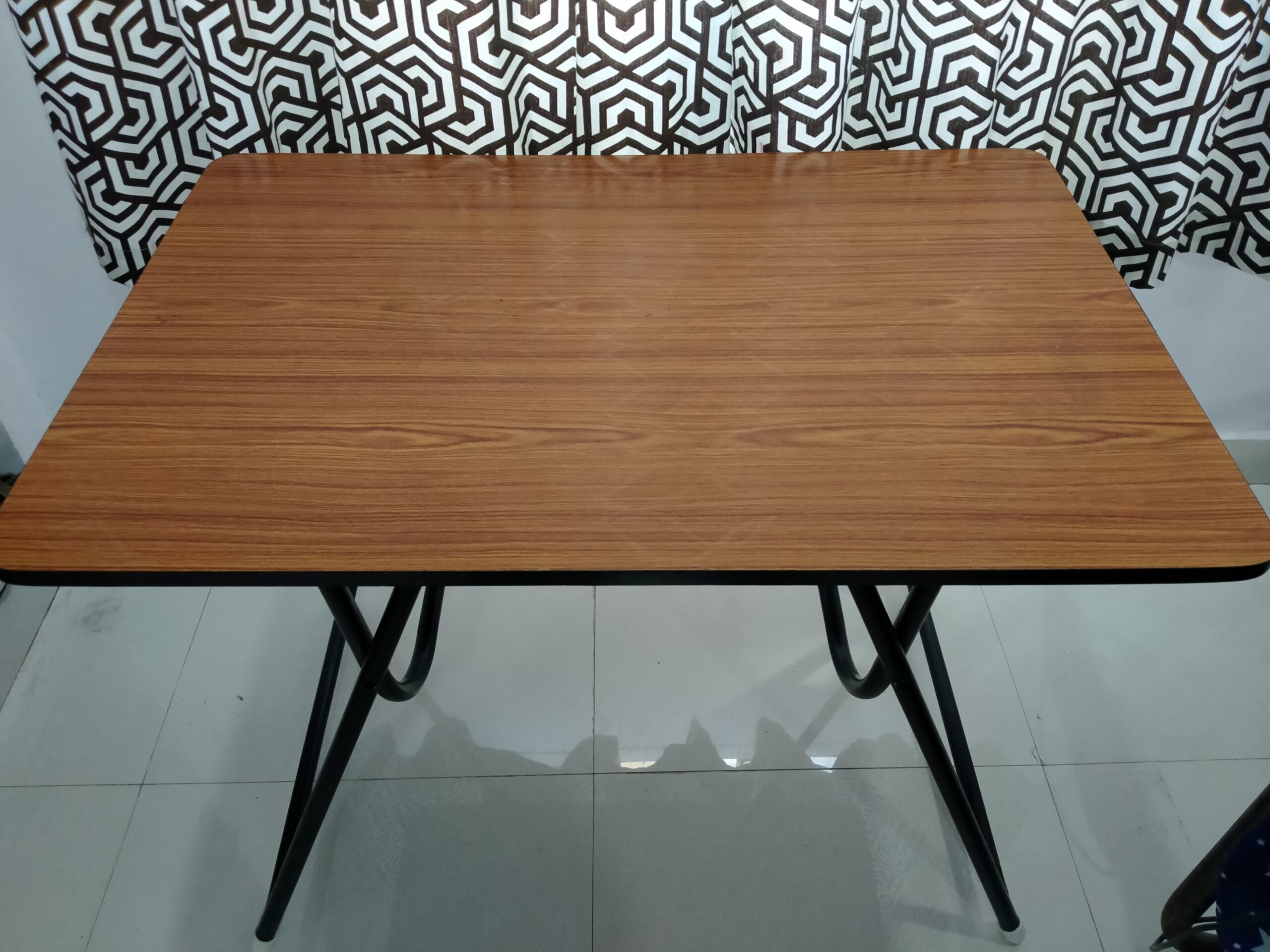
Inspect the actual folding mechanism rather than assuming every table works alike. Lifetime’s manufacturer guidance describes both clip-locking and self-locking fold-in-half designs, with different setup steps. Follow the instructions for the table you receive and confirm the locks are engaged before use. (lifetime.com)
Ask the lender or rental provider to demonstrate setup and explain cleaning requirements. Do not improvise a repair to a damaged hinge or locking mechanism.

7. Avoid the common mistakes—and make a reversible choice
Before deciding, check for these easy-to-miss errors:
- Counting imagined uses. Separate confirmed plans from “I might.”
- Comparing unequal items. A cheaper object is not a bargain if it cannot do the required job.
- Using only the headline rental rate. Request the total with supplies, attachments, taxes, transport and other applicable charges.
- Treating borrowing as obligation-free. Establish the return arrangements and responsibility for damage.
- Forgetting cleanup. Reserve time to clean the item before returning or storing it.
- Confusing a reservation with confirmed access. Check the exact item, dates and collection arrangements.
- Ignoring accessories. Check hoses, cords, bags and other included parts at collection and return.
- Forcing a numerical answer. A small cash saving need not outweigh inconvenient storage or an unworkable return deadline.
Your final check is simple:
Can I afford the full cost, obtain a suitable item when needed, transport it, use it correctly, and complete its care or return requirements?
If several answers remain uncertain, consider borrowing or renting for the first real use, provided the arrangements work. Record what the job required and how much effort collection, use and cleanup involved.
You can then decide about ownership from an actual need—not from the promise of an object you have not yet used.