Quick answer
Before buying, find the exact model’s manual, locate replacement parts with prices, and check who can fit them. Look for documented access to wear components—not just visible screws or a “repairable” claim. Read the warranty and identify a realistic repair option. If the seller cannot answer a key question, record it as unknown, not as a promise.
A useful pre-purchase check does not require opening a product. It requires following a possible repair from beginning to end: identifying the fault, obtaining the correct part, installing it safely, and paying the complete bill.
The FTC identifies restricted parts, unavailable repair information and difficult product construction as barriers to repair. Your task is to look for evidence that those barriers will not prevent the repairs you care about. (ftc.gov)
1. Start with the exact model and its manual
Copy the full model number from the listing or product label. Include any suffix, generation or regional version. Do not rely on the product family name alone.
Then search the manufacturer’s support site for that exact model. Save the manual before buying, and look for:
- Routine cleaning and maintenance instructions.
- Instructions for replacing filters, bulbs or batteries.
- Troubleshooting steps and explanations of warning lights.
- Part numbers or a route to compatible replacements.
- Tasks explicitly reserved for service personnel.
Separate three kinds of information: assembly instructions, owner maintenance instructions and repair documentation. Treat finding one as a reason to check for the others, not as proof that all are available.
For example, Dyson’s V8 Cyclone support page provides a user manual, filter-care guides, spare parts and a service route. Those are separate pieces of evidence worth checking individually. (dyson.com)
If documentation is missing, ask support a specific question:
“For model [number], can an owner replace [component]? Please send the instructions and compatible part number.”
Save the response. An unanswered question remains an uncertainty; it does not establish that the product is either repairable or unrepairable.
2. Check parts availability beyond accessories
Make a short list of components you would want to replace rather than discard the whole object.
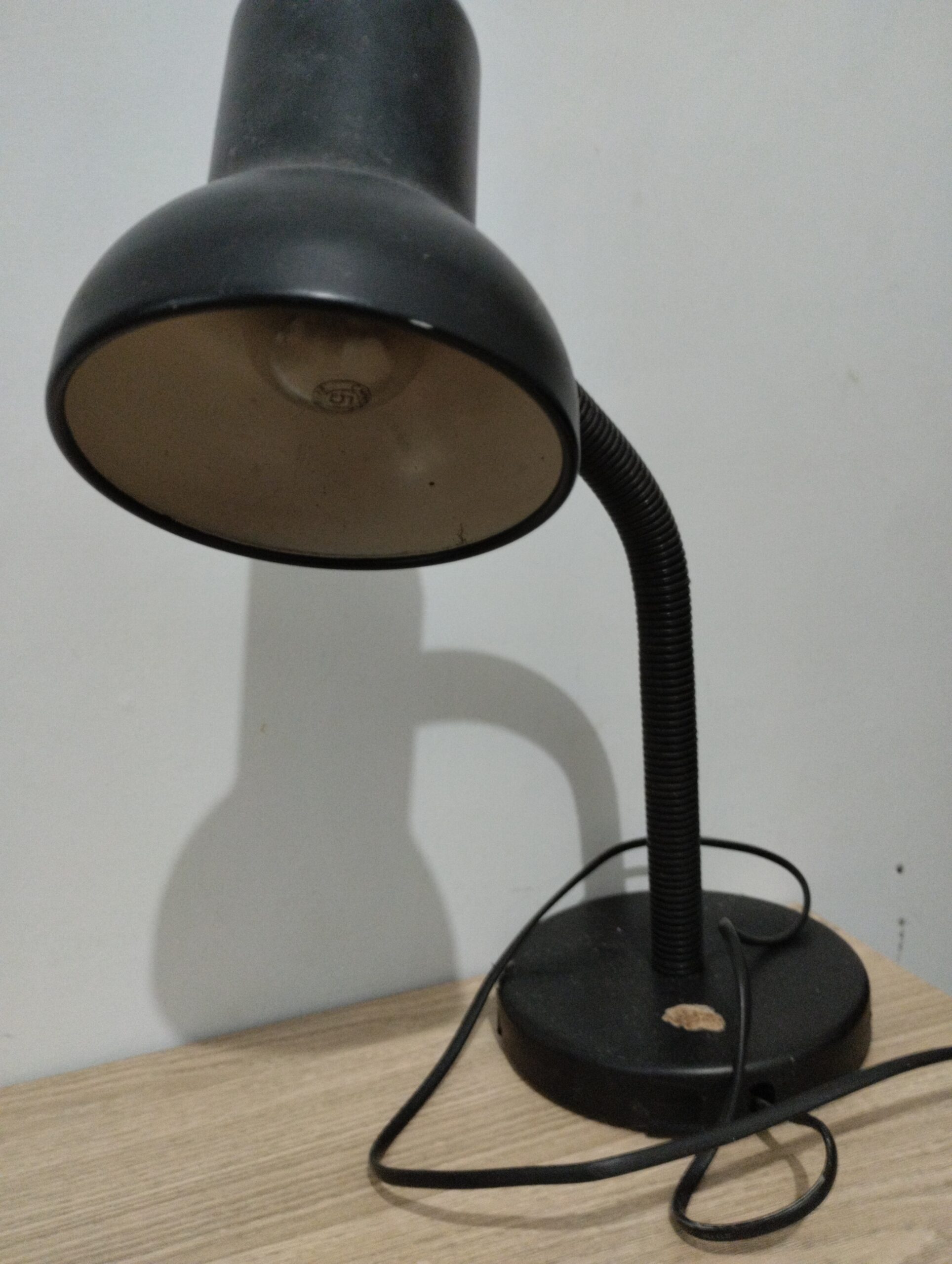
For a vacuum, investigate the filter, brush roll, hose or wand, dust container, charger and—if cordless—battery. For a desk lamp, investigate the bulb or light module, power adapter if present, switch, clamp and adjustable joints.
Ask these questions for each important component:
| Check | Evidence to look for |
|---|---|
| Is the part compatible? | An exact model match or written confirmation |
| Can you obtain it? | A purchasing route available in your country |
| What does it cost? | A current price, plus delivery charges |
| Who can fit it? | Owner instructions or an identified repair service |
| How long will it be supported? | A written availability commitment, if one exists |
Distinguish a part that is listed, one that is currently orderable, and one promised for future availability. Record stock status separately from price.
Also ask whether you can buy the small component itself or must replace a larger assembly. France’s official repairability criteria explicitly consider spare-parts availability, delivery time and parts prices relative to the product price—useful questions even when you are shopping elsewhere. (ecologie.gouv.fr)
Do not buy speculative spares just to compensate for vague support. First establish whether there is a credible route to getting the right part when needed.
3. Look for documented access, not just visible screws
Without dismantling a display model, inspect product photographs and read the replacement instructions. Ask:
- Does the manual explain how to reach the component?
- What tools does the procedure require?
- Can the relevant fasteners be reused?
- Is a replacement cover, seal or other fitting required?
- Does the manufacturer allow the owner to perform the task?
Tools, access and fastener characteristics are part of France’s repairability scoring framework. The FTC’s repair report also discusses how construction choices, including adhesive, can affect repair access. (ecologie.gouv.fr)
Visible screws are a clue, not a complete answer. Look for a procedure that connects those screws to the component you want to replace. Likewise, do not assume that a smooth enclosure proves nothing can be serviced; ask for documentation.
Keep your pre-purchase investigation non-invasive. Do not pry open products, remove covers or test electrical connections.
If the only answer is “a technician can repair it,” follow up: which technician, with what parts, and through which service route? That may still be a workable option, but you need more than a general assurance.

4. Ask different questions about vacuums and desk lamps
Repairability is most useful when assessed component by component.
| Question | Vacuum cleaner | Desk lamp |
|---|---|---|
| What can I maintain? | Check instructions for filters, blockages and brush-roll cleaning. | Check bulb replacement, cleaning and any permitted mechanical adjustment. |
| What part should I price? | A filter, brush roll or battery appropriate to the model. | The specified bulb, or the exact light module and adapter where applicable. |
| What needs clarification? | Whether a brush roll is sold separately from the complete head. | Whether “replaceable light source” means owner replacement or technician service. |
| What is outside this beginner check? | Opening motor housings, modifying wiring or rebuilding battery packs. | Replacing mains wiring, sockets, switches or internal electronics. |
For a vacuum, read cleaning instructions closely. The Dyson V8 Cyclone manual permits washing specified filters but says its Motorbar cleaner head and brush bar are not washable. It also documents a battery-release procedure. These are model-specific instructions, not rules for every vacuum. (dyson.com)
For a lamp, start by distinguishing a separate bulb from a built-in light source. IKEA’s U.S. TERTIAL listing specifies a separately purchased E26 LED bulb. Its SOLSKUR listing says the included light source is replaceable through an IKEA spare-part route, but does not publish a replacement-part price there. Neither statement establishes that every other lamp component is replaceable. (ikea.com)
For a proprietary light module, ask for its part number, price and replacement instructions before buying.
Treat rewiring as a separate, qualified repair—not as an extension of changing a bulb. CPSC guidance calls for a qualified repair shop to replace a damaged appliance cord with the proper one. (cpsc.gov)

5. Work through a real parts-cost example
Here is a documentary check, not a product recommendation or hands-on test.
On October 6, 2026, Dyson’s U.S. parts page for the V8 with pinch pre-filter/E battery listed:
| Component | Part number | Listed price |
|---|---|---|
| Replacement battery | 974815-01 | $129.99 |
| Charger | 967813-02 | $24.99 |
| Pre-filter | 965661-01 | $11.99 |
The page warns that V8 vacuums have multiple filter and battery types, so compatibility still needs checking. (dyson.com)
If a diagnosis established that both the listed battery and charger needed replacement, their advertised parts subtotal would be:
$129.99 + $24.99 = $154.98
That is arithmetic, not a prediction of failure or a complete repair quote. Add any applicable tax, shipping, diagnosis and labor.
The practical lesson is to price more than an inexpensive consumable. Finding an affordable filter does not answer whether a battery or motor repair would fit your budget.
For each candidate, record one routine-maintenance cost and one more consequential replacement cost. If the second cost cannot be verified, leave it blank and ask support rather than estimating it.
6. Read repairability labels as evidence, not guarantees
If a listing displays a repairability score, identify the scheme, product category and exact model behind it.
France’s official repairability index includes vacuum cleaners. It uses a score out of 10 based on documentation, disassembly and access, tools and fasteners, spare-parts availability, parts prices, and category-specific criteria. The detailed scoring must be available to consumers under the scheme’s rules. (ecologie.gouv.fr)
Ask for the breakdown rather than judging by the overall number alone. Use it to investigate the component that matters to you.
For a U.S. purchase, also ask:
- Does the score cover the exact version sold here?
- Are the listed parts available through U.S. support?
- Can you access the documents used in the assessment?
- Is the score supported by a named scheme, rather than an unexplained retailer graphic?
Do not treat an energy-efficiency rating as an answer to your repair questions. Look separately for evidence about parts and access.
A score can organize your investigation. It cannot replace a current compatibility check, parts listing or repair quotation.
7. Read the warranty and identify a repair route
Read the written warranty before paying. Check its duration, exclusions, claims process, labor charges, shipping responsibilities and proposed remedy. The FTC says warranties must be available before purchase, including when shopping online. (consumer.ftc.gov)
In the United States, a manufacturer generally cannot require specified parts or services merely to preserve warranty coverage unless they are supplied free or the FTC grants a waiver. However, coverage may exclude damage caused by an outside part or repair. That is not permission to perform unsafe work. (consumer.ftc.gov)
Then investigate what happens after warranty coverage ends. Ask the manufacturer about service locations, mail-in arrangements and diagnosis charges.
For a vacuum, contact a repair shop with the exact model number. For a lamp, ask a qualified lamp or electrical-appliance repair service whether it accepts that type of product.
Useful questions include:
- Can you obtain parts for this model?
- Will you assess it before committing to a repair?
- Is the assessment fee credited toward the repair?
- What delivery, shipping or collection arrangements apply?
Do not count a nearby shop as an available option until it confirms that it accepts the product. If the route is mail-in only, include packing effort and time without the item in your decision.
8. Make a decision with a short evidence checklist
For each candidate, label every important answer verified, unknown or not available.
Before buying, aim to complete this checklist:
- I have the exact model number and relevant manual.
- I understand the permitted owner-maintenance tasks.
- I found compatible replacements for important wear components.
- I recorded parts prices and stock status separately.
- I know who can perform repairs I should not attempt.
- I read the warranty and saved useful written answers.
- I considered delivery, labor and time without the product.
Common mistakes are checking only accessories, treating a “replaceable” claim as a confirmed purchasing route, assuming a warranty guarantees affordable later repairs, and choosing on a score without investigating the relevant component.
Keep safety separate from affordability. Stop using an appliance with a damaged cord or plug and obtain qualified help; do not use a temporary patch to keep it operating. (cpsc.gov)
You do not need to prove that every component will remain repairable forever. You need enough evidence to decide whether the product offers a repair route you could realistically use. When two objects otherwise meet your needs, documented parts, clear instructions and confirmed service are concrete reasons to favor one over the other.